

Author: Newsroom
Re:wild Your Campus is proud to announce that the Natural History Museum of Los Angeles County (NHM) in Exposition Park has officially earned its Green Ground Certification, marking a historic milestone: NHM is the first museum in the nation to receive this designation, and the second major institution in Los Angeles to be certified, following UCLA’s Gold-level certification last year.
NHM manages four acres of grounds, 90% of which is cared for without syntehtic pesticides. With a fully organic land care program, NHM demonstrates that even highly visited, public-facing landscapes can be maintained in ways that protect people, pollinators, and the planet.
“We created the Green Grounds Certification to incentivize organizations to protect both human and ecological health, while highlighting their commitment to biodiversity. This proves that managing grounds without chemicals is practical and achievable,” said Mackenzie Feldman, Co-Director of Re:wild Your Campus. “NHM is proving that you don’t have to be a college campus to be a leader in safe and sustainable land care. This is a huge step forward in growing a movement of organic, pesticide-free public spaces.”
The museum’s horticulture team, led by Senior Manager of Horticulture Daniel Feldman, manages the grounds using fully organic methods. NHM maintains its small lawn areas with occasional aeration, overseeding, and organic topdressing, and the team produces its own compost onsite to enrich soil throughout the gardens. Mulch is applied generously at a depth of two to four inches to support soil microbial activity and reduce water needs. Only OMRI-certified fertilizers are used, including in the museum’s Edible Garden. The museum has also been a long-standing adopter of environmentally responsible landscape technology; for more than a decade, staff have relied exclusively on STIHL battery-powered equipment, aligning naturally with California’s phaseout of gas-powered small engines.
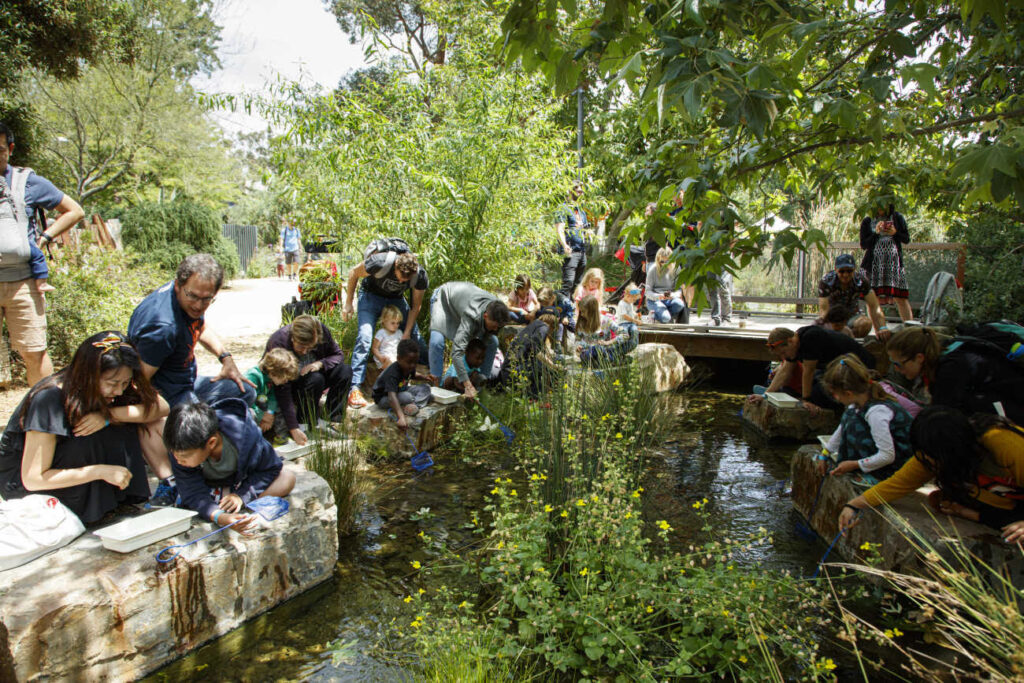
Across the grounds, NHM continues to expand its use of native and drought-tolerant plants. These plantings are supported by a weather-based irrigation system and a combination of low-flow spray heads and drip irrigation, which are monitored closely and repaired quickly whenever issues arise. Together, these practices ensure that the museum’s landscape remains both water-efficient and biologically rich.
“We’re excited to get the word out about the success of our practices for the past 10 years and share that you can have a thriving garden without using pesticides,” said Daniel Feldman, NHM’s Horticulture Manager. “We are hoping to educate and share with other institutions that might follow our lead.”
As a public institution committed to education, NHM incorporates its ecological approach into the visitor experience. The museum offers garden tours to school groups, summer camps, interested community members, and specialized classes. Outdoor interpretation and signage help visitors understand the importance of native plants, pollinator habitats, and healthy soils, while onsite educators activate the gardens through informal activities and guided experiences. NHM’s Horticulture team also collaborates regularly with other departments and community partners to create programs that connect the museum’s horticultural work with broader environmental education.
The museum’s ecological leadership extends beyond its own borders. Although exterior areas outside the museum’s fencing are managed by Exposition Park contractors who still use herbicides, NHM is actively working with these partners to reduce and eventually eliminate chemical use in the surrounding landscape. The museum also avoids all rodenticides on its grounds, relying instead on natural predators such as birds of prey. Soil testing is conducted when plant health issues arise, allowing staff to make informed decisions that prioritize soil microbial health, pollinator well-being, and wildlife protection.
With NHM joining UCLA as a certified campus, Los Angeles is emerging as a leader in organic land care and setting an example for cities nationwide.